


Key Takeaways
- Stoicism promotes environmental sustainability through its core principles.
- Ethical and mindful consumption is central to the Stoic way of living.
- Embracing Stoic virtues can help address both personal and global environmental issues.
Who is poor?
The day before we left Oregon, I stood in a garage I'd spent 30 years filling and realized I couldn't name half of what was in it.
Boxes of tools I'd used once. A second set of camping gear in case the first set ever failed. Cables for devices I no longer own. I had built a career in construction and sustainability and lectured people about resource use, and here was my own garage telling on me.
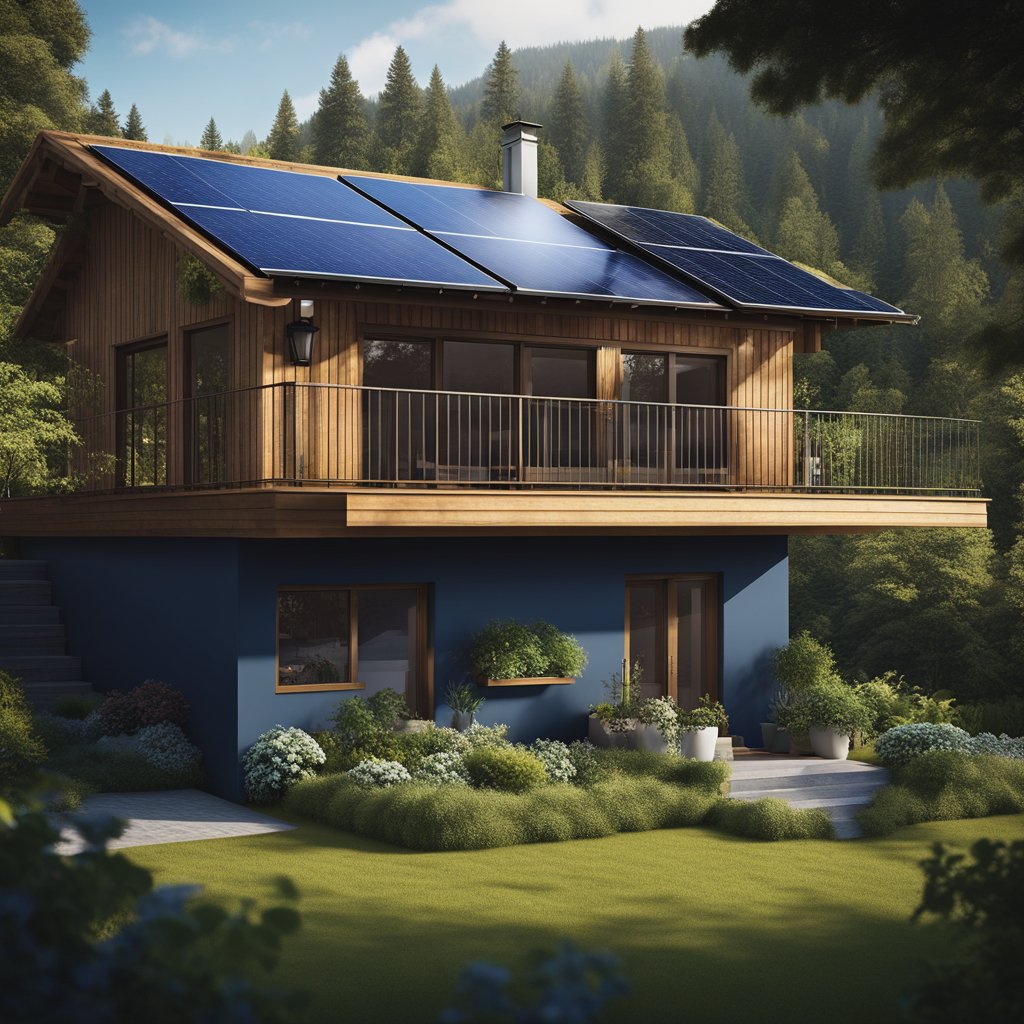
We were moving to Panama City with what fit in a few suitcases. Everything else had to go. And as I sorted three decades of stuff into keep, give, and toss, a sentence from Seneca kept circling back: "It is not the man who has too little, but the man who craves more, who is poor."
I'd read that line years earlier and nodded at it. Standing in that garage, I finally felt it.
This is what I want to talk about. Not Stoicism as a quote you screenshot, and not sustainability as a recycling chart on the fridge. The place where the two meet, and what happens to your actual life when they do.
Where Stoicism and sustainability actually meet

I've practiced Stoicism for years, and the overlap with sustainable living keeps surprising me. Obviously, the Stoics never wrote about carbon footprints. The core instruction, living in agreement with nature, already points there.
Stoicism began in Athens around 300 BC with Zeno of Citium and ran through Seneca, Epictetus, and Marcus Aurelius. Four virtues sit at the center of it: wisdom, courage, justice, and temperance. None of those were invented for environmental work. They just happen to produce a lighter way of living when you take them seriously.
Wisdom is seeing clearly and deciding rationally. Courage is doing the hard thing without flinching. Justice is fairness toward other people. Temperance is moderation, restraint, and knowing when you have enough. Run your consumption through those four, and most of the waste falls out on its own.
Kai Whiting, a researcher who writes on Stoicism and sustainability, makes this case well. A person trying to live virtuously tends to consume less, waste less, and think past their own lifetime. The eco-friendly part is a byproduct of the character part. Nobody needed to predict climate science to arrive there.
The virtues, in plain terms

People treat the four virtues like a museum exhibit. They work better as daily questions.
Wisdom asks, "Do I actually understand what this purchase, this trip, this habit costs, beyond the price tag?" Courage asks: Am I willing to do the inconvenient thing when the convenient thing is right there? Justice asks: Who pays for my comfort, and are they at the table? "Temperance asks the one most of us dodge: Is this enough?
The Stoics aimed all of this at eudaimonia, a flourishing life. Not a comfortable life, not an impressive one. A life lived well, in line with reason and nature. You don't get there by accumulating. You get there by choosing.
What the Stoics understood about consumption

Stoicism teaches that chasing more is a reliable way to stay unsatisfied. Epictetus, who was born into slavery and knew the difference between needing something and wanting it, taught that freedom comes from wanting less, not owning more.
I think about this every time I'm about to buy something. The Stoic practice here is simple to describe and hard to do: prioritize what's necessary, resist the pull to accumulate, and treat money as a tool rather than a scoreboard.
In practice, it looks ordinary. I buy fewer things and buy them better. I choose products with less packaging and reusable options when they exist. I ask whether I'll still want this in a year. Most of the time, the honest answer is no, and the thing stays on the shelf.
The apatheia the Stoics talked about, freedom from being ruled by passion, shows up right here. When greed isn't making the decision, you spend with clarity. You also generate a lot less waste, which is the sustainability win nobody sold you but you get anyway.
Living in agreement with nature

For the Stoics, nature held a central place. Living in accordance with nature meant recognizing that everything connects, and that human life is one part of a larger system, not the point of it.
That belief carries a duty. We don't get to strip-mine the future for a short-term gain. The Stoic idea of stewardship says we hold the earth in trust for the people who come after us, including the ones not born yet. Marcus Aurelius wrote his Meditations as a working emperor, reminding himself daily that he was a small part of a vast whole. That perspective is good philosophy and good ecology at once.
My permaculture training taught me the same lesson in a different language. You design with the system instead of against it. You watch where water wants to go before you fight it. The Stoics arrived at that humility 2,000 years earlier, without the soil maps.
Responsibility and the dichotomy of control
Here's the Stoic tool I use the most, and it matters enormously for anyone who cares about the planet and feels overwhelmed by it.
Epictetus drew a hard line between what's in our control and what isn't. Our judgments, choices, and actions are ours. Outcomes, other people, and the weather are not. The skill is pouring your energy into the first column and making peace with the second.
Climate news will crush you if you skip this step. The problem is global, the levers feel far away, and despair is the easy landing spot. The dichotomy of control gives you somewhere useful to stand. You can't fix the grid by yourself. You can choose what you buy, how you eat, how you travel, what you support, and how you talk to the people around you. Do those steadily, and let the rest be the rest.
Staying focused on what you control, year after year, is how you last decades instead of burning out in a season. It takes real discipline to keep your hands on the levers that are actually yours.
The practices I actually use

I'll keep this concrete, because vague advice helps no one.
Self-control runs the whole thing. I set small daily intentions, limit screen time, and eat with some attention. Each small act of restraint makes the next one easier. Over time, the restraint stops feeling like a restraint and starts feeling like room to breathe.
Simplicity is the next layer. Fewer, better things. Less to maintain, store, insure, and eventually throw away. Living in Panama with a fraction of what I once owned, I keep waiting to miss the rest. I don't.
Community is the part I underrated for years. The Stoic virtue of justice points outward, toward the larger whole. Helping a neighbor, joining a local effort, and showing up for something beyond yourself, this reinforces that you're part of a community with a shared stake. It also makes the sustainable life social instead of solitary, which is the difference between a habit that lasts and one that doesn't.
Climate, scale, and what's in your hands
Stoicism gives you a sane way to think about a problem this big. Seneca's teaching on controlling desire maps directly onto overconsumption, the engine under most of our emissions. Want less, burn less. It really can be that direct at the personal level.
I make conscious food choices and lean toward plant-based meals more often than I used to, which lowers my footprint without requiring a personality transplant. I pay attention to energy and water at home. I support fair practices when I'm choosing where my money goes. None of these acts saves the world alone. Together, repeated, across a lot of people who decided enough was a real number, they add up.
Organizations face the same math at a larger scale. A business that values long-term sustainability over the next quarter is just temperance applied to a balance sheet. The principle doesn't change when the numbers get bigger.
Emotional resilience for the long haul

Caring about this work will wear you down if you let every setback land full force. The Stoics built their whole system for exactly this.
Temperance keeps your reactions in proportion, so frustration doesn't curdle into despair. The dichotomy of control keeps you focused on your own actions instead of outcomes you can't dictate. Reflection, even a few minutes of journaling, keeps you honest about how you're actually doing.
I treat resilience as a requirement, not a bonus. A sustainable life has to be emotionally sustainable too, or you'll quit it. The point is to keep showing up, calm and clear, year after year. That steadiness is worth more than any burst of intensity you can't repeat.
A few honest questions

How can Stoic principles guide sustainable living? Live in agreement with nature and practice self-control, and lower consumption follows. The virtues push you toward moderation and accountability, which is most of sustainability in plain clothes.
What's the ecological benefit of actually practicing this? Less consumption and less waste, which conserves resources. The mindful, civic side of Stoicism also nudges you toward better choices and supporting better policy.
How does Stoicism handle the idea of "enough" in a buy-more culture? It teaches contentment with less and treats the endless chase for more as a trap. Focus on what's necessary, and your footprint shrinks while your life gets clearer.
Can simplicity really cut my carbon footprint? Yes. Fewer possessions means lower material demand, less energy use, and less waste. The math is boring and reliable.
What I'd ask you to do

Don't reorganize your whole life this week. Do one thing.
Walk into the most cluttered room you own, the garage, the closet, or the storage unit you're paying for, and find five things you can't remember acquiring. Give them away. Notice what it feels like to have less and lose nothing.
That feeling is the start of the whole philosophy. The Stoics had a word for the life on the other side of it. They called it enough.
Frequently Asked Questions



How can Stoic principles guide sustainable living practices?
Stoic principles, like living according to nature and practicing self-control, provide a solid foundation for sustainable choices. By emphasizing moderation and accountability, Stoic teachings encourage us to minimize waste and consumption.
What are the ecological benefits of practicing Stoicism?
Practicing Stoicism can lead to reduced consumption and waste, conserving natural resources. This philosophy promotes mindful living and civic responsibility, which can drive positive environmental actions and policies.
How does Stoicism address the concept of enough in a consumer society?
Stoicism teaches us to find contentment with less, challenging the constant pursuit of more. By focusing on what is truly necessary, we reduce our ecological footprint and resist the pressures of consumerism.
In what ways do Stoic virtues align with environmental ethics?
The Stoic virtues of wisdom, courage, self-control, and justice support strong environmental ethics. These virtues lead us to make informed decisions, act boldly for the environment, maintain self-discipline in consumption, and advocate for fair resource distribution.
Can Stoic simplicity contribute to reducing one's carbon footprint?
Embracing Stoic simplicity means prioritizing essentials and lowering material needs. This lifestyle choice directly decreases personal carbon emissions by reducing energy usage and promoting sustainable habits.
How might Stoicism influence decision-making in environmental conservation?
Applying Stoic philosophy to environmental conservation means making rational, virtue-driven choices. This approach helps prioritize long-term ecological health over short-term gains, fostering decisions that benefit both human and ecological communities.
0 comments